Tampilkan postingan dengan label obesity. Tampilkan semua postingan

Jumat, 26 Agustus 2011

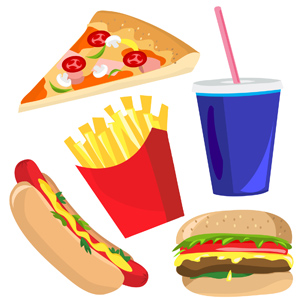
4 Reasons Fast Food Cause Obesity

1. Unhealthy Ingredients Make Fast Food Cause Obesity
Most fast food ingredients contain more energy, total fat, saturated fat, carbohydrates and added sugars than healthier food of the same weight.
2. Larger Portion Sizes Make Fast Food Cause Obesity
As popularized by the 2004 documentary Super Size Me (if you haven't seen it, you can watch it for free here), the problem with the ingredients of fast food is further compounded by fast foods’ growing portion sizes.
3. Low Cost Makes Fast Food Cause Obesity
Researchers at the University of Washington found that a 2,000-calorie diet of junk food costs 10 times less than a 2,000 calorie healthy diet. 6 This low cost of fast food encourages people to choose it over more expensive healthier food, which is a big reason that lower-income individuals are more likely to be obese.
4 Convenience Makes Fast Food Cause Obesity
The final factor that makes fast food cause obesity is its convenience, or more specifically, how close fast food restaurants are to your home, job or school.
source:http://www.bariatric-surgery-source.com

Posted on 20.15 | Categories:

Rabu, 17 Agustus 2011

16 Facts About Soft Drinks and Obesity part 2

Two thirds of all High Fructose Corn Syrup goes into soft drinks.
Milk consumption, on the other hand has decreased by 33% in the last 30 years.
Each additional daily serving of soda increases a child’s chance risk for obesity by 60%.
In the last 25 years, the obesity rate in California rose from 8.9%  to 24.3%. That’s one in four Californians!
The cost in medical and health expenses to the state is estimated at $41 billion.
The average size of a soda increased from 6.5 oz in the 1950′s to 16.2 oz today (149% increase!)
Over 10.7 million Californians over the age of one drink at least one soda a day (or other sugar-sweetened beverage).
41% of children ages 2-11 drink at least one soda or other sugar-sweetened beverage every day.
That number goes up to 62% of adolescents ages 12-17.
source:http://blog.fooducate.com

Posted on 23.36 | Categories:

16 Facts About Soft Drinks and Obesity part 1

Only 1 in 4 adults drinks pop though.
Adults who do drink one or more sodas or other sugar-sweetened beverages each day are 27% more likely to be overweight or obese.
The average American consumes 22 teaspoons of added sugar a day, vs the recommended 5-9. That 200-400% more than recommended.
If you think that’s a high number, just one 20 fl oz single use bottle of soda has 17 teaspoons of sugar.
Almost half of the additional calories growth in our diet since the 1970′s come from soda.
Each American consumes an average of 50 gallons of sugar sweetened soft drinks per year.
Soda is the #1 source of added sugar in the American Diet.NEXT
source:http://blog.fooducate.com

Posted on 23.33 | Categories:

Senin, 15 Agustus 2011

20 CAUSES of OBESITY

FOODS
Candy
Coffee Drinks With Cream and Sugar Added
Donuts, Pastries, Cookies, Cakes and Other Confectionery Delights
Fried Foods
Pancakes with Syrup
Potato Chips
Processed Cereals
So-called “Diet Low-Fat” No-Sugar Foods
Soda Pop
White Bread

NON FOODS
Air conditioning
Ancestors' environment
Decreased smoking
Medicine
Obesity linked to fertility
Older moms
Pollution
Population age, ethnicity
Sleep debt
Unions of obese spouses
source:www.healingtalks.com&www.foxnews.com

Posted on 18.01 | Categories:

Sabtu, 06 Agustus 2011

10 Causes of Obesity

1. Sleep debt. Getting too little sleep can increase body weight. Today's Americans get less shut-eye than ever.
2. Pollution. Hormones control body weight. And many of today’s pollutants affect our hormones.
3. Air conditioning. You have to burn calories if your environment is too hot or too cold for comfort. But more people than ever live and work in temperature-controlled homes and offices.
4. Decreased smoking. Smoking reduces weight. Americans smoke much less than they used to.
5. Medicine. Many different drugs -- including contraceptives, steroid hormones, diabetes drugs, some antidepressants, and blood pressure drugs -- can cause weight gain. Use of these drugs is on the upswing.
6. Population age, ethnicity. Middle-aged people and Hispanic-Americans tend to be more obese than young European-Americans. Americans are getting older and more Hispanic.
7. Older moms. There's some evidence that the older a woman is when she gives birth, the higher her child's risk of obesity. American women are giving birth at older and older ages.
8. Ancestors' environment. Some influences may go back two generations. Environmental changes that made a grandparent obese may "through a fetally driven positive feedback loop" visit obesity on the grandchildren.
9. Obesity linked to fertility. There's some evidence obese people are more fertile than lean ones. If obesity has a genetic component, the percentage of obese people in the population should increase.
10. Unions of obese spouses. Obese women tend to marry obese men. If there are fewer thin people around -- and if obesity has a genetic component -- there will be still more obese people in the next generation.
source : www.foxnews.com

Posted on 00.28 | Categories:

Jumat, 05 Agustus 2011

10 Facts on Obesity


  1. Regular physical activity helps maintain a healthy body
  2. Globally, over 40 million preschool children were overweight in 2008
  3. Eating a healthy diet can help prevent obesity
  4. Overweight and obesity are linked to more deaths worldwide than underweight
  5. More than 1.4 billion adults were overweight in 2008, and more than half a billion obese
  6. Overweight and obesity are defined as "abnormal or excessive fat accumulation that may impair health"
  7. Children's choices, diet and physical activity habits are influenced by their surrounding environment
  8. Supportive environments and communities are fundamental in shaping people’s choices and preventing obesity
  9. For an individual, obesity is usually the result of an imbalance between calories consumed and calories expended
  10. Curbing the global obesity epidemic requires a population-based multisectoral, multi-disciplinary, and culturally relevant approach.source:http://www.who.int/
Posted on 10.11 | Categories:

Senin, 01 Agustus 2011

Childhood Obesity : The Health Risk

Health risks now
Childhood obesity can have a harmful effect on the body in a variety of ways. Obese children are more likely to have:

  • High blood pressure and high cholesterol, which are risk factors for cardiovascular disease (CVD). In one study, 70% of obese children had at least one CVD risk factor, and 39% had two or more.2
  • Increased risk of impaired glucose tolerance, insulin resistance and type 2 diabetes.3
  • Breathing problems, such as sleep apnea, and asthma.4,5
  • Joint problems and musculoskeletal discomfort.4,6
  • Fatty liver disease, gallstones, and gastro-esophageal reflux (i.e., heartburn).3,4
  • Obese children and adolescents have a greater risk of social and psychological problems, such as discrimination and poor self-esteem, which can continue into adulthood.3,7,8

Health risks later

  • Obese children are more likely to become obese adults.9, 10, 11 Adult obesity is associated with a number of serious health conditions including heart disease, diabetes, and some cancers.12
  • If children are overweight, obesity in adulthood is likely to be more severe. source:www.cdc.gov
Posted on 23.43 | Categories:

Childhood Obesity : Measure childhood overweight and obesity.

Body mass index (BMI) is a measure used to determine childhood overweight and obesity. It is calculated using a child's weight and height. BMI does not measure body fat directly, but it is a reasonable indicator of body fatness for most children and teens.
A child's weight status is determined using an age- and sex-specific percentile for BMI rather than the BMI categories used for adults because children's body composition varies as they age and varies between boys and girls.CDC Growth Charts are used to determine the corresponding BMI-for-age and sex percentile. For children and adolescents (aged 2—19 years): 
Overweight is defined as a BMI at or above the 85th percentile and lower than the 95th percentile for children of the same age and sex.
Obesity is defined as a BMI at or above the 95th percentile for children of the same age and sex. Childhood Obesity: The Risk .source:http://www.cdc.gov

Posted on 23.37 | Categories:

Selasa, 19 Juli 2011

Defining Obesity

Overweight and obesity are defined by the WHO as abnormal or excessive fat accumulation that presents a risk to an individuals health.

Overweight and obesity are major risk factors for a number of chronic diseases, including diabetes, cardiovascular diseases and cancer and while it was once an issue only in high income countries, overweight and obesity has now dramatically risen in low- and middle-income countries.Such countries are now facing a "double burden" of disease, for while they continue to deal with the problems of infectious disease and under-nutrition, they are also experiencing a rapid upsurge in chronic disease risk factors such as obesity and overweight, particularly in urban settings.

Under-nutrition and obesity often exist side-by-side within the same country, the same community and even within the same household and this double burden is caused by inadequate pre-natal, infant and young child nutrition followed by exposure to high-fat, energy-dense, micronutrient-poor foods and lack of physical activity.
source : http://www.news-medical.net
Posted on 19.14 | Categories:

Obesity : Consequences and Health Risks

Obesity is a concern because of its implications for the health of an individual as it increases the risk of many diseases and health conditions including: -

Coronary heart disease
Type 2 diabetes
Cancers (endometrial, breast, and colon)
Hypertension (high blood pressure)
Dyslipidemia (for example, high total cholesterol or high levels of triglycerides)
Stroke
Liver and Gallbladder disease
Sleep apnoea and respiratory problems
Osteoarthritis (a degeneration of cartilage and its underlying bone within a joint)
and Gynaecological problems (abnormal menses, infertility).
These conditions can cause or contribute to premature death and substantial disability.

Cardiovascular disease - mainly heart disease and stroke - is already the world's number one cause of death, killing 17 million people each year and diabetes has rapidly become a global epidemic - according to WHO projections diabetes deaths will increase by more than 50% worldwide in the next 10 years.

Less common health conditions associated with increased weight include asthma, hepatic steatosis and sleep apnoea.

source : http://www.news-medical.net

Posted on 19.13 | Categories:

Economic Consequences Effect Relating Obesity

Overweight and obesity and their associated health problems have a significant economic impact on health systems and the medical costs associated with overweight and obesity have both direct and indirect costs - direct medical costs may include preventive, diagnostic, and treatment services related to obesity, while indirect costs relate to loss of income from decreased productivity, restricted activity, absenteeism, and bed days and the income lost by premature death.
source : http://www.news-medical.net
Posted on 19.13 | Categories:

About Obesity

Obesity and overweight have in the last decade become a global problem - according to the World Health Organization (WHO) back in 2005 approximately 1.6 billion adults over the of age 15+ were overweight, at least 400 million adults were obese and at least 20 million children under the age of 5 years were overweight.

Experts believe if the current trends continue by 2015 approximately 2.3 billion adults will be overweight and more than 700 million will be obese. The scale of the obesity problem has a number of serious consequences for individuals and government health systems.
source : http://www.news-medical.net

Posted on 19.11 | Categories: